Quick answer: Choose tempered glass for the sharpest, most scratch-resistant display on frames up to about 40 inches, and for charcoal, pastel, or other powdery media. Choose shatter-resistant acrylic for oversized frames (36 inches and up), high-traffic spaces, and homes with kids, because it weighs about half as much as glass and handles impact better. At Frame Amo, our Signature Frames and Shadow Box Frames use tempered glass, and our oversized Grand Frames use shatter-resistant acrylic.
When you frame artwork, posters, or photography, the cover you choose (framers call it "glazing") matters almost as much as the frame itself. It affects how clear your piece looks, how much the frame weighs, how safe it is to hang, and how well your work holds up over time. The two most common options are tempered glass and acrylic, the clear plastic sheet many people know as plexiglass.
This guide breaks down the real differences between the two, backed by guidance from conservation institutions and materials manufacturers, so you can pick the right cover for every piece you display.
Key Takeaways
- Tempered glass is about 4 times stronger than ordinary glass and breaks into small, relatively harmless pieces instead of sharp shards.
- Acrylic weighs about half as much as glass of the same size and thickness, which makes it the practical choice for oversized frames.
- Glass resists scratches better; acrylic is softer and needs gentler cleaning.
- Use glass for charcoal, pastel, and chalk, because standard acrylic can build a static charge that lifts loose pigment.
- Neither cover stops fading on its own. Placement away from direct sun matters as much as the glazing.
 What Is Tempered Glass?
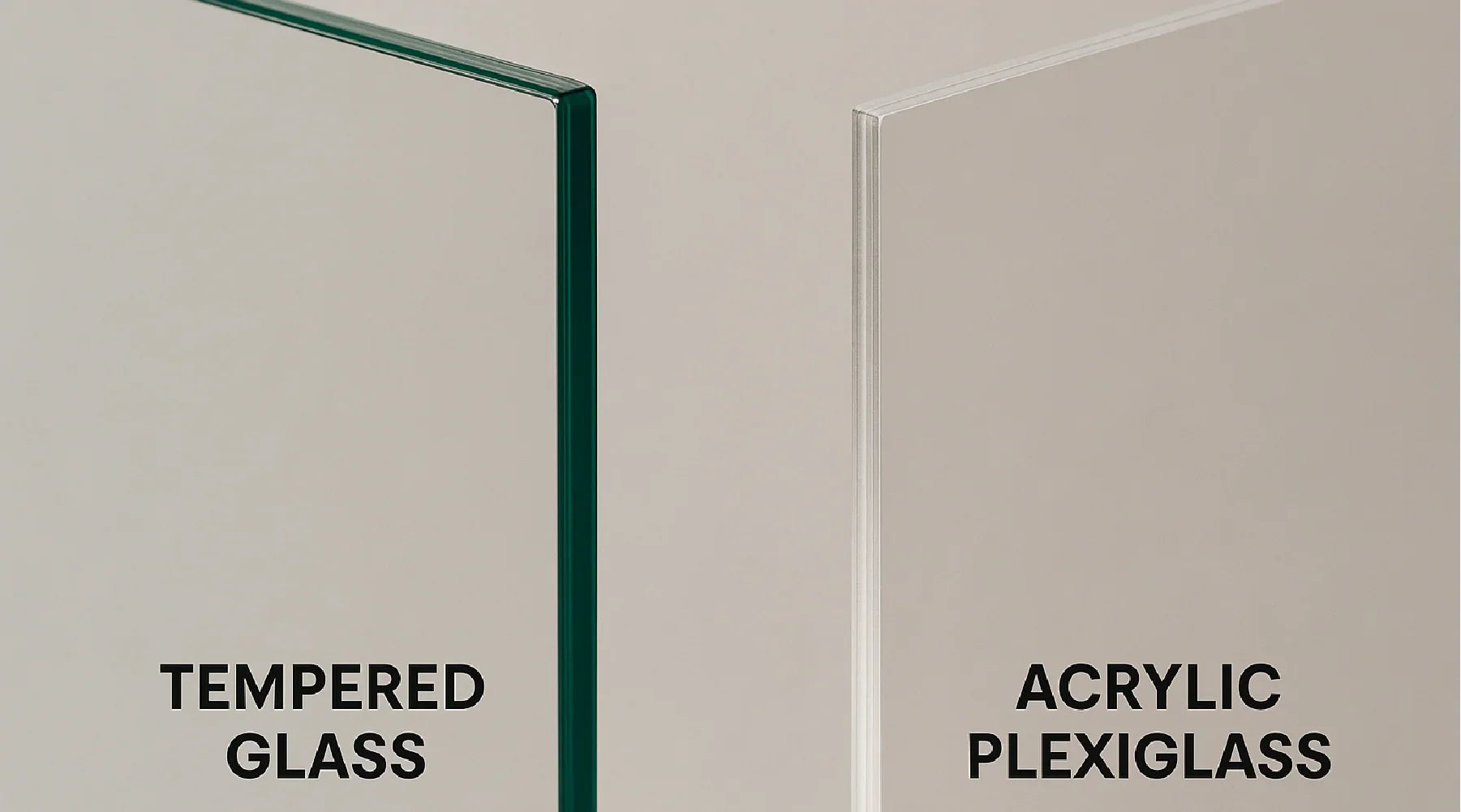
Tempered glass is glass that has been heated and then rapidly cooled. This process locks the outer surfaces into compression, which makes it about four times stronger than ordinary (annealed) glass. Just as important for framing, when tempered glass does break, it fractures into small, relatively blunt pieces rather than the long, jagged shards you get from standard glass.
Tempered glass is stronger, but it is not unbreakable. Glass manufacturer AGC notes that tempered glass can still break from many of the same things that break regular glass. Its advantage is that it breaks more safely.

What Is Acrylic Glazing?
Acrylic is a clear, rigid plastic sheet used in place of glass. According to acrylic manufacturer ACRYLITE, an acrylic sheet weighs half as much as glass of the same size and thickness, and in falling-ball impact testing a 1/4" acrylic sheet performed in the same range as 1/4" tempered glass and far better than standard plate glass. If acrylic does crack, it tends to break into larger pieces with much less sharp edges.
Tempered Glass: Pros and Cons
| Pros | Cons |
|---|---|
| Excellent scratch resistance | Heavier, especially in larger frames. Our Signature Frames come with hanging hardware pre-installed to make hanging as simple as possible. |
| Crystal-clear, rigid surface for a gallery-quality look | Can still break under hard impact. We test our packaging so glass frames arrive safely. |
| Breaks into small, blunt pieces, safer than standard glass | Usually costs more than acrylic at the same size |
| Best choice for charcoal, pastel, and other powdery media | UV filtering varies by product, so check specifications |
| Easy to clean with standard glass cleaner on a cloth | Less ideal for frames that are moved or shipped often |
Acrylic: Pros and Cons
| Pros | Cons |
|---|---|
| About half the weight of glass, so large frames are easier to hang | Scratches more easily than glass |
| Shatter-resistant, with strong impact performance | Can build static that attracts dust and can lift loose pigment |
| Easier and safer to move, ship, and handle | Less rigid than glass, so very large sheets can flex slightly |
| Safer for homes with children and high-traffic spaces | Lower-quality acrylic may yellow over time |
| Makes oversized framing practical (up to 72 inches with our Grand Frames) | Needs gentle cleaning: no paper towels or ammonia-based cleaners |
Tempered Glass vs. Acrylic: Side-by-Side Comparison
Here is how the two materials compare on the factors that matter most for framing:
| Feature | Tempered Glass | Shatter-Resistant Acrylic |
|---|---|---|
| Weight | Heavier | About 50% lighter |
| Strength | About 4x stronger than standard glass | High impact resistance; flexes instead of shattering |
| If it breaks | Small, blunt pieces | Larger pieces with less sharp edges |
| Scratch resistance | Excellent | Lower; clean gently |
| Clarity | Crystal-clear, rigid | Clear; premium acrylic resists yellowing |
| Static | Minimal | Can attract dust and lift loose pigment |
| Best frame sizes | Small to large (up to about 40") | Large to oversized (36" to 72") |
| Cost | Generally higher | Generally lower |
| Frame Amo collections | Signature Frames, Shadow Box Frames | Grand Frames |
When Should You Choose Tempered Glass?
Choose tempered glass when you want maximum clarity and scratch resistance for work that will hang in one place. It is the better fit for:
- Fine art photography and prints where a crisp, rigid surface shows every detail
- Charcoal, pastel, chalk, and colored pencil. The State Archives of Florida recommends glass for these easily crumbled media, because acrylic can build a static charge that pulls pigment off the paper.
- Frames up to about 40 inches that will stay on the wall
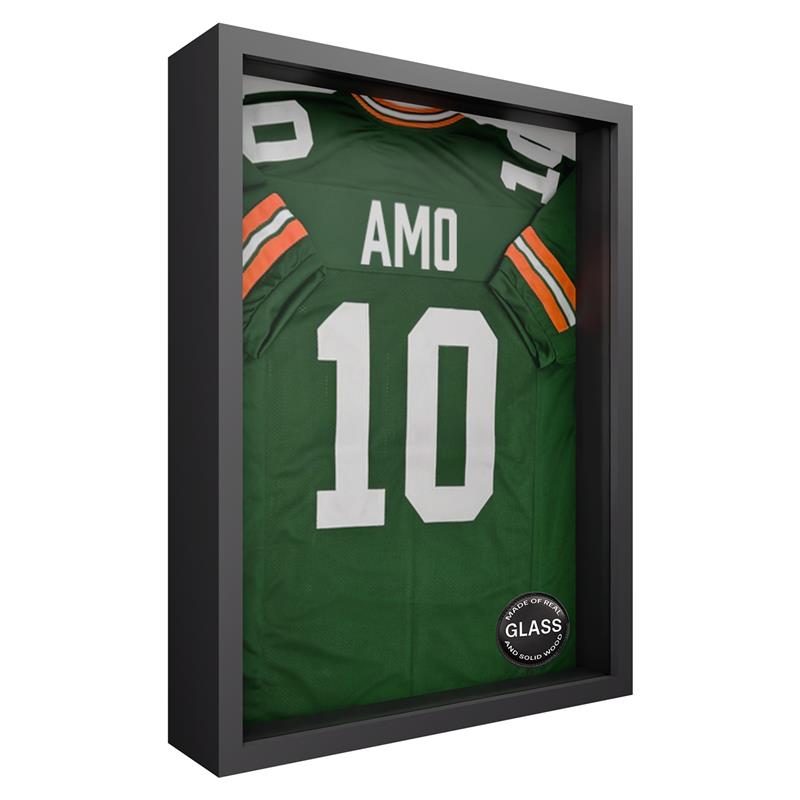
- 3D keepsakes and memorabilia like jerseys, medals, and awards that deserve a scratch-resistant front
Our Signature Frames pair a solid wood border (1.5 inches wide and 1 inch thick) with tempered glass, in sizes from 4 inches up to 41 inches, including hard-to-find sizes. Most customers choose our classic black finish for a clean, gallery-style look.
Framing something with depth? Our Shadow Box Frames use the same tempered glass with a 1.5-inch display depth, so keepsakes, awards, and 3D art sit safely behind a clear, durable front.
When Should You Choose Acrylic?
Choose shatter-resistant acrylic when weight, safety, or size is the priority. It is the better fit for:
- Oversized statement pieces. Glass gets heavy fast as frames grow, and acrylic keeps large frames manageable to hang.
- Homes with kids or pets, plus hallways, nurseries, and playrooms
- Commercial and high-traffic spaces like offices, studios, restaurants, and retail
- Art you move often, such as pieces for shows, events, staging, or rotating displays
Our Grand Frames are built for big work: a solid wood border (1.5 inches wide and 1 inch thick) with a premium shatter-resistant acrylic front, in oversized sizes up to 72 inches. Popular sizes include 36x48, 40x60, 48x48, and 48x72.
Does Glazing Protect Artwork From Fading?
Glazing helps, but it is only part of the answer. The Canadian Conservation Institute notes that both UV and visible light cause fading, so blocking UV alone will not fully stop it. To keep your work looking its best:
- Hang framed pieces away from direct sunlight
- Use LED bulbs, which give off very little UV
- Pair your frame with an acid-free mat, like our Custom Mat Boards, to keep the artwork from touching the glazing
- For irreplaceable originals, ask a conservator about museum-grade UV-filtering glazing
How to Clean Tempered Glass and Acrylic Frames
The Library of Congress recommends dusting with a soft, lint-free cloth and spraying any cleaner onto the cloth, never directly onto the glazing, so liquid can't seep under the edge and reach your art.
- Tempered glass: Standard glass cleaner on a microfiber cloth works well.
- Acrylic: Use a soft microfiber cloth with a plastic cleaner or mild soap and water. Avoid paper towels and ammonia-based cleaners (like many window sprays), which can scratch or cloud acrylic.
Frequently Asked Questions
Is tempered glass or acrylic better for picture frames?
Neither is better for every frame. Tempered glass offers better scratch resistance and clarity and is ideal for frames up to about 40 inches and for powdery media like charcoal or pastel. Acrylic is about half the weight and more impact resistant, which makes it the better choice for oversized frames, high-traffic areas, and homes with children.
Is acrylic the same as plexiglass?
Yes. Plexiglass is a common name for acrylic sheet, which is also sold under brand names like Plexiglas and Lucite. In framing, these terms all refer to clear acrylic glazing.
Is tempered glass safe for picture frames?
Yes. Tempered glass is about four times stronger than standard glass, and if it does break, it fractures into small, relatively blunt pieces instead of sharp shards. That makes it a safer choice than ordinary picture frame glass.
Why do large frames use acrylic instead of glass?
Weight and safety. Acrylic weighs about half as much as glass of the same size and thickness, so a 48x72 frame with acrylic is far easier to hang and move. It is also more impact resistant, which matters when a large frame hangs in a busy space.
Can I use acrylic to frame charcoal or pastel drawings?
It is better to use glass. Standard acrylic can build a static charge that lifts loose pigment off the paper. If you need acrylic for a large charcoal or pastel piece, look for specialty anti-static acrylic, which the Library of Congress notes can be safely used with powdery media.
The Bottom Line
Pick tempered glass when clarity and scratch resistance come first, and pick shatter-resistant acrylic when size, weight, and safety come first. For most framed prints and photos under about 40 inches, tempered glass delivers the cleanest look. For oversized statement pieces, acrylic is the practical, safer choice.
Still deciding? Start with the size of your piece:
- Up to 41 inches: Signature Frames with tempered glass
- Keepsakes and 3D items: Shadow Box Frames with tempered glass
- Oversized, up to 72 inches: Grand Frames with shatter-resistant acrylic
Sources
- Scientific American: How Is Tempered Glass Made?
- AGC Glass: Tempered Glass Breakage (PDF)
- ACRYLITE: Acrylic vs. Glass
- Library of Congress: UV-Filtering Acrylic or Glass Glazing
- State Archives of Florida: Glazing, Mats, and Backing Board
- Canadian Conservation Institute: Ultraviolet Filters (CCI Note 2/1)