In This Article
Key Takeaways11x14 Frame16x20 FrameComparisonWhich to ChooseSizingHow to FrameProtect Your ArtHow to HangVideosShopFAQSources
Quick answer: You have 2 great ways to frame 11x14 artwork. For a bold, edge-to-edge look, use an 11x14 frame with the mats removed. For a polished, gallery-style presentation, use a 16x20 frame with an 11x14 double mat. Both are solid wood frames with tempered glass, and both are built for 11x14 prints, photos, certificates, and fine art.
The 11x14 is one of the most popular print sizes in photography and fine art. It is large enough to make an impact on the wall and small enough to fit almost anywhere: a hallway, a desk wall, a gallery wall, or above a console table. This guide walks you through both framing options, how to choose between them, how to measure and prep your print, and how to hang it like a pro.
Key Takeaways
- No mat: An 11x14 frame shows your full print, with about 1/4" hidden under the frame lip on each edge (visible area approx. 10.5 x 13.5").
- Matted: A 16x20 frame with an 11x14 mat opening (10.5 x 13.5") adds a wide border that makes the art look larger and more finished.
- Double matted: The 16x20 frame includes 2 mats (12x16 and 11x14) that stack to create a layered, gallery-style reveal around your print.
- One frame, many sizes: The 11x14 frame also fits 8x10 and 5x7 prints with its included mats. The 16x20 frame also fits 12x16 and full 16x20 prints.
- Hang at 57": Center your frame about 57 inches from the floor for a museum-standard look.
Option 1: 11x14 Frame Without a Mat (Full-Size Display)

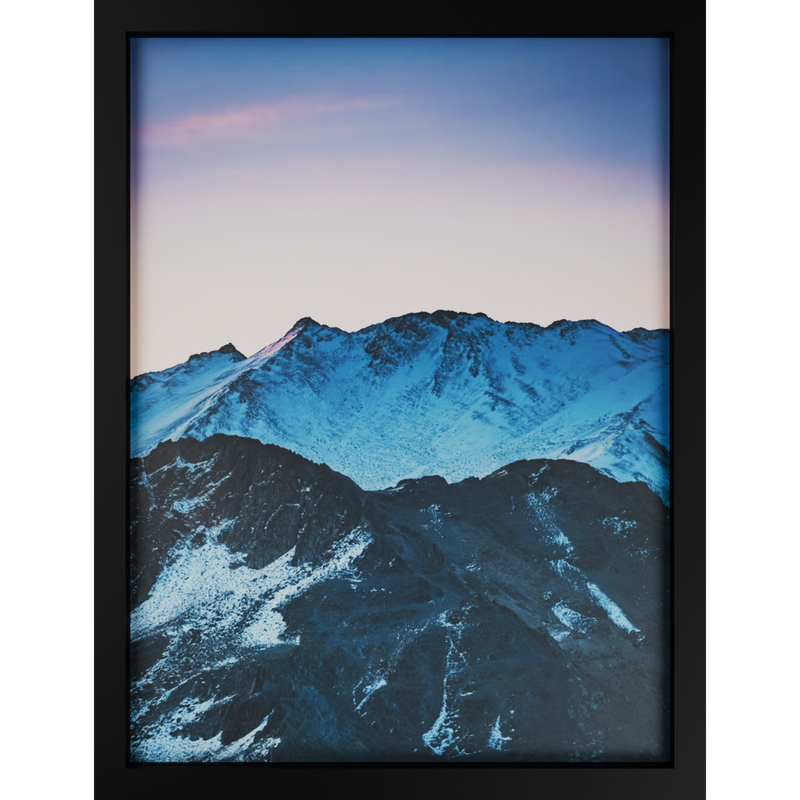
Displays: Full 11x14" artwork
Visible Area: Approx. 10.5 x 13.5" (the frame lip overlaps about 1/4" on each edge)
Frame Size: 11x14"
Outer Dimensions: 13.5 x 16.5 x 1"
Remove the included mats and your 11x14 print fills the entire frame. This is the cleanest, most modern way to display an 11x14, and it puts all the attention on the artwork itself. It is ideal for:
- Posters and art prints with full-bleed designs
- Photography where you want every inch of the image visible
- Certificates and awards printed on 11x14 stock
- Gallery walls where you want a tight, uniform grid
- Smaller walls or shelves where space is limited
Bonus: The 11x14 frame comes with 2 mats, so the same frame can also display an 8x10 print (7.5 x 9.5" opening) or a 5x7 print (4.5 x 6.5" opening). If your collection includes a mix of sizes, this frame lets you keep a consistent look across all of them.
Option 2: 16x20 Frame With 11x14 Double Mat (Gallery Display)

Displays: 11x14" artwork
Mat Opening: 10.5 x 13.5"
Frame Size: 16x20"
Includes: 2 mats (a 12x16 mat and an 11x14 mat)
If you want your 11x14 to look like it belongs in a gallery, this is the option to choose. The 16x20 frame surrounds your print with a wide mat border, which gives the artwork breathing room, draws the eye inward, and makes the whole piece read larger on the wall.
Stack both included mats for a double matted look. The 12x16 mat sits on top, and the 11x14 mat sits underneath, creating a thin layered reveal around your print. Double matting adds depth and a custom-framed finish without the custom-frame price or wait time.
Because it comes with 2 mats, the 16x20 frame is also one of the most flexible frames you can own. Depending on which mats you use, it can display:
- 11x14 art, double matted: Both mats stacked for a layered, gallery look
- 11x14 art, single matted: The 11x14 mat only, for a clean wide border
- 12x16 art, matted: The 12x16 mat only
- 16x20 art, no mat: Remove both mats for a full-size 16x20 print
11x14 Frame vs. 16x20 Frame With Mat: Side-by-Side Comparison
| Feature | 11x14 Frame (No Mat) | 16x20 Frame (Double Mat) |
|---|---|---|
| Look | Bold, modern, edge-to-edge | Classic, gallery-style, layered |
| Visible art area | Approx. 10.5 x 13.5" | 10.5 x 13.5" mat opening |
| Outer dimensions | 13.5 x 16.5" | [CONFIRM 16x20 OUTER DIMENSIONS] |
| Mats included | 2 (for 8x10 and 5x7 prints) | 2 (12x16 and 11x14) |
| Other sizes it fits | 11x14, 8x10, 5x7 | 16x20, 12x16, 11x14 |
| Glazing | Tempered glass | Tempered glass |
| Best for | Posters, full-bleed prints, tight gallery walls, small spaces | Fine art, photography, gifts, statement pieces, larger walls |
| Wall presence | Compact | Larger, more prominent |
Which Option Should You Choose?
Choose the 11x14 frame without a mat if:
- Your print has important details close to the edges and you want to show as much of it as possible
- The design is meant to be full-bleed (common with posters and graphic art)
- You are building a dense gallery wall and want frames to sit close together
- Wall space is tight, like a narrow hallway or between windows
Choose the 16x20 frame with a double mat if:
- You are framing fine art, a limited-edition print, or a photograph you are proud of
- You want the piece to feel bigger and more important on the wall
- You are giving the frame as a gift and want a finished, professional look
- You want a protective space between your print and the glass (more on that below)
- You want the option to switch to a 12x16 or 16x20 print later
Understanding 11x14 Sizing
Why the visible area is smaller than 11x14
Every picture frame has a lip (called a rabbet) that holds the glass, art, and backing in place. On an 11x14 frame, that lip overlaps about 1/4" on each edge, so the visible area is approximately 10.5 x 13.5". The mat opening in a 16x20 frame is cut to the same 10.5 x 13.5" for the same reason: the mat needs to overlap the edges of the print slightly so the print stays in place and doesn't slip through the window.
Tip: If you are printing your own artwork, keep signatures, text, and key details at least 1/4" from the edges.
Will my photo fit an 11x14 without cropping?
An 11x14 print has a ratio of about 11:14 (roughly 0.79). Most cameras and phones capture images in different ratios, so some cropping is normal:
- DSLR and mirrorless cameras (3:2 ratio): Expect a noticeable crop on the long side, about 2.5" worth of image at this size.
- Most smartphones (4:3 ratio): A small crop, less than 1" on the long side.
- 8x10 images (4:5 ratio): Very close to 11x14, with only a slight crop.
When you order prints, choose "crop to fit 11x14" and check the preview so nothing important gets cut off.
How to Frame an 11x14 Print: Step by Step
- Measure your print. Confirm it is exactly 11 x 14". Measure the paper itself, not just the image area.
- Choose your presentation. Use the 11x14 frame for a full-size display or the 16x20 frame for a matted look.
- Clean your workspace. Work on a clean, flat, soft surface. Wash and dry your hands, or wear cotton gloves, to avoid fingerprints on the print and glass.
- Open the frame. Lift the back tabs and remove the backing board and display insert.
- Set up the mats (16x20 only). For a double mat, place the 11x14 mat underneath the 12x16 mat. For a single mat, use only the 11x14 mat. For the 11x14 frame, remove both mats.
- Position the print. Center your print face-down behind the mat opening (or directly against the glass in the 11x14 frame). Use acid-free photo corners or artist tape on the back of the mat if you want the print to stay perfectly in place.
- Close the frame. Replace the backing board, press the tabs down flat, and check the front for dust or shifted alignment.
- Choose orientation. Both frames include hanging hardware for portrait or landscape display.
How to Protect Your 11x14 Artwork for the Long Term
Framing is about more than looks. The right materials help your print stay vibrant for years. Conservation experts agree on a few simple principles:
- Use acid-free materials. According to the Northeast Document Conservation Center (NEDCC), acid migrating from nearby framing materials is a common source of damage to paper, and poor-quality materials can cause problems that are difficult or impossible to reverse. The U.S. National Archives recommends mat board made from cotton rag or chemically purified wood pulp that is buffered or pH-neutral. Frame Amo's custom mat boards are acid-free, lignin-free, alpha cellulose (purified wood pulp) boards.
- Keep the art off the glass. The New York State Archives advises against letting photographs and prints touch the glass that covers them, and recommends a window mat to separate the two. This is one of the biggest advantages of the 16x20 matted option for valuable prints.
- Limit direct sunlight. The Library of Congress notes that visible and ultraviolet light can cause yellowing, embrittlement, and fading in photographic prints. Hang your art away from windows that get strong direct sun.
- Avoid tape on the front. Never use household tape or glue directly on a print. Use acid-free photo corners or hinges instead.
- For irreplaceable originals, the Library of Congress preservation guidelines for matting and framing are a great reference, and a conservation framer can help with one-of-a-kind or historic pieces.
How to Hang an 11x14 Frame
The 57-inch rule
Galleries and museums commonly hang art so the center of the piece sits about 57 inches from the floor, which matches average eye level (Apartment Therapy). To find your nail position:
- Measure the height of your frame and divide by 2.
- Add that number to 57". This is where the top of your frame should be.
- Measure the distance from the hanging hardware to the top of the frame and subtract it. Mark that spot for your nail.
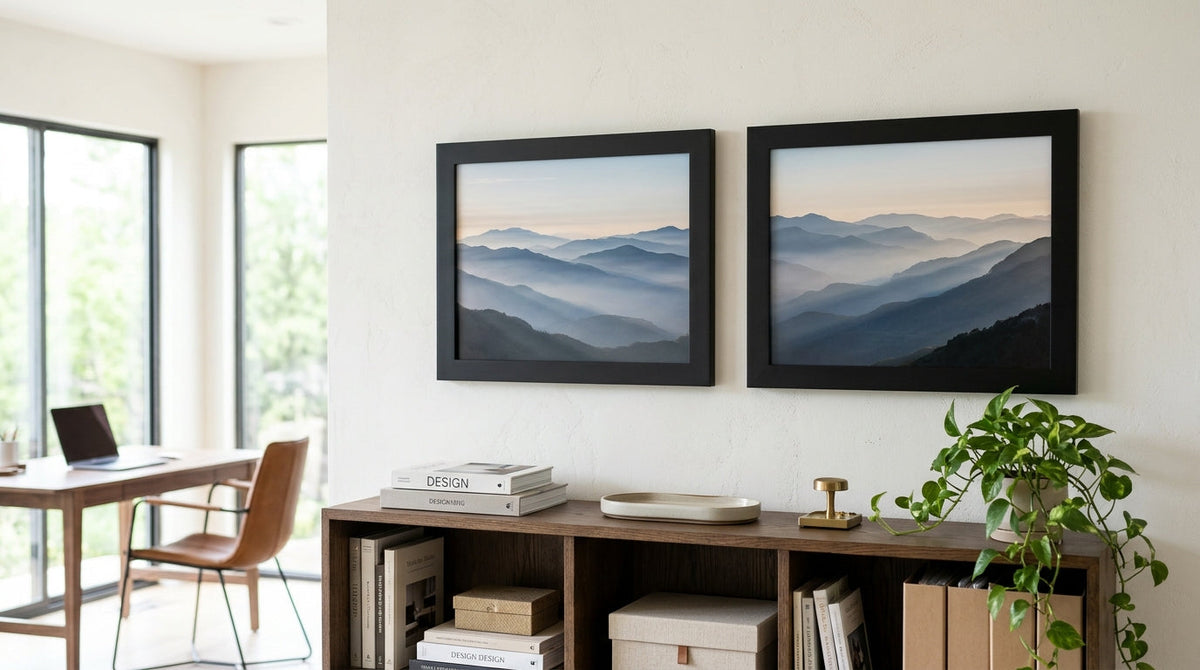
Above furniture: When hanging over a sofa, console, or dresser, leave about 6 to 10 inches between the top of the furniture and the bottom of the frame.
Building a gallery wall with 11x14 frames
11x14 frames are a gallery wall staple because they are big enough to anchor a layout and small enough to group in multiples. Here is a simple, proven approach:
- Pick your anchor. Use a 16x20 frame with an 11x14 double mat as the centerpiece, then surround it with unmatted 11x14 frames.
- Plan on the floor first. Lay your frames out on the floor, or trace them on kraft paper and tape the templates to the wall.
- Keep spacing consistent. Leave 2 to 3 inches between frames for a cohesive look.
- Center the group at 57". Treat the whole arrangement as one large piece and center it at eye level.
- Keep the finish consistent. Matching black frames tie together different prints, colors, and subjects.
Popular 11x14 layouts:
- Grid of 4 or 6: Identical 11x14 frames in a 2x2 or 2x3 grid. Clean and modern, ideal for photo series.
- Centerpiece and flank: One 16x20 matted frame in the middle with an 11x14 frame on each side.
- Staircase stagger: 11x14 frames climbing diagonally up a stairwell, each centered 57" above its step.
Watch: Framing Tips From Frame Amo
Shop Frames for Your 11x14 Artwork
Whether you want a bold full-size display or a layered gallery look, both frames are made from solid wood with tempered glass and ship ready to hang.
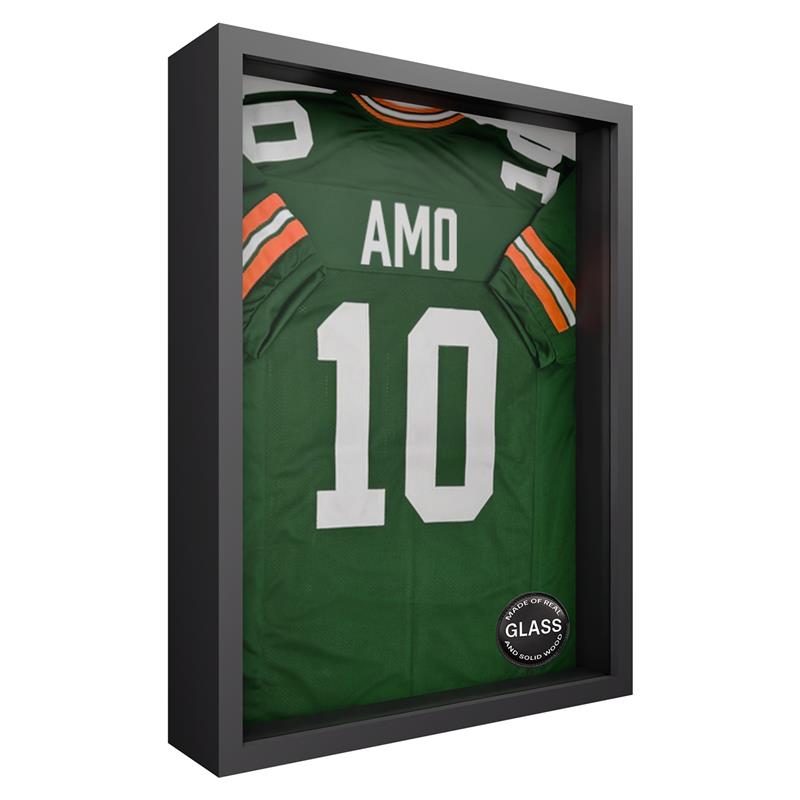
Framing something larger? Explore our Signature Frames in standard and hard-to-find sizes, our oversized Grand Frames for 36" and up, our Studio Series Frames in value packs of 5 and 10, and our Shadow Box Frames for keepsakes and memorabilia.
Shop the 11x14 Frame (No Mat) Shop the 16x20 Frame (Double Mat)
Frequently Asked Questions
What size frame do I need for an 11x14 print?
You can use an 11x14 frame to display the full print with no mat, or a 16x20 frame with an 11x14 mat for a matted, gallery-style presentation. The 11x14 frame shows about 10.5 x 13.5" of the print, and the 16x20 frame's mat opening is also 10.5 x 13.5".
What size mat do I need for an 11x14 print?
You need a mat with a 10.5 x 13.5" opening, which overlaps the print by about 1/4" on each side so it stays in place. The most common pairing is a 16x20 frame with an 11x14 mat. Frame Amo's 16x20 frame includes both an 11x14 mat and a 12x16 mat, so you can single or double mat your print.
Will an 11x14 frame show my entire print?
Almost. The frame's lip covers about 1/4" on each edge, so the visible area is approximately 10.5 x 13.5". Keep signatures, text, and important details at least 1/4" from the edges of the print.
Can I put an 8x10 or 5x7 photo in an 11x14 frame?
Yes. Frame Amo's 11x14 frame includes 2 mats: one with a 7.5 x 9.5" opening for 8x10 prints and one with a 4.5 x 6.5" opening for 5x7 prints. Remove both mats to display a full 11x14 print.
What is the difference between a single mat and a double mat?
A single mat is one layer of mat board around your print. A double mat stacks 2 mats so a thin edge of the bottom mat shows around the print, adding depth and a more custom, gallery-style look. The 16x20 frame lets you choose either option.
Is a 16x20 frame too big for an 11x14 print?
No. A 16x20 frame is the classic choice for a matted 11x14 print. The mat adds a border of a few inches around the art, which makes the piece look larger and more finished on the wall. Choose the 11x14 frame instead if wall space is limited or you prefer a full-size, edge-to-edge look.
Sources
- Northeast Document Conservation Center: Matting and Framing for Works on Paper and Photographs
- U.S. National Archives: Displaying Family Archives
- New York State Archives: Matting and Framing
- Library of Congress: Care, Handling, and Storage of Photographs
- Library of Congress: Preservation Guidelines for Matting and Framing
- Apartment Therapy: The 57" Rule for Hanging Pictures