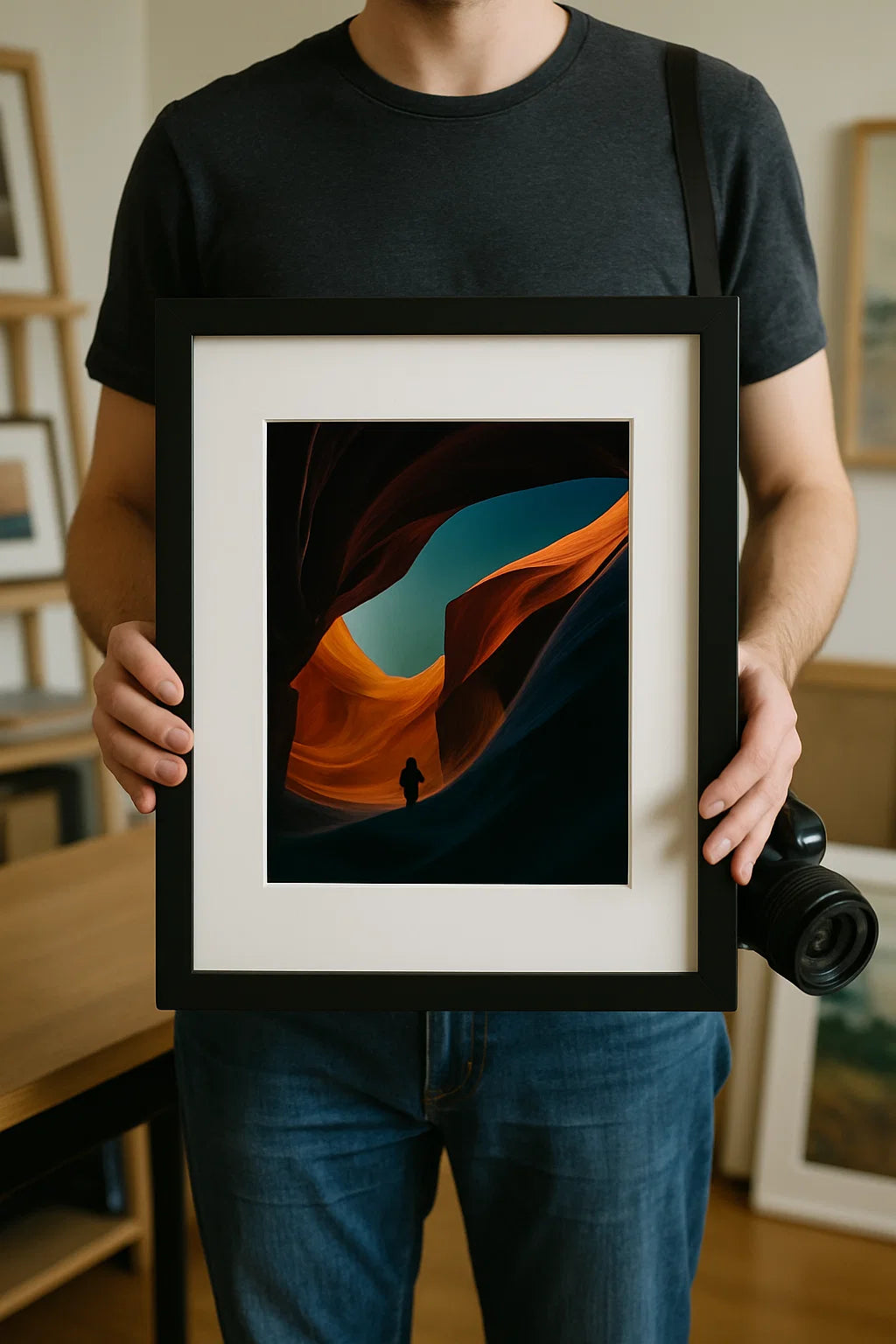

Mounting artwork correctly inside your picture frame protects your print, prevents shifting, and ensures a clean, professional presentation. Whether your frame features tempered glass or acrylic (plexiglass) glazing, using the right technique prevents scratches, bent tabs, and long-term damage.
At Frame Amo, a Texas-based picture frame company serving customers across the United States, we help customers from Austin and Dallas to New York, California, Florida, and Illinois mount their artwork safely. Proper installation is especially important in climates with high humidity (like Florida), dry air (like Colorado and Arizona), or fluctuating temperatures.
Watch: How to Mount Artwork in Your Picture Frame
Step 1: Removing the Backing
- Place the frame face down on a clean, flat surface.
- Use a small, firm tool — such as a flathead screwdriver or the prongs of a metal fork — to gently bend the metal tabs straight up.
- Do not twist or rotate the tabs. Twisting weakens the metal and can cause breakage over time.
- Once all tabs are lifted, remove the backing board to access the inside of the frame.
Pro Tip: Always work on a soft surface (like a towel) to avoid scratching the frame finish or glazing.
Step 2: Inserting Your Artwork
- Place your photo or artwork face down in the frame opening.
- If using a mat, position the artwork behind the mat window.
- Secure artwork with acid-free tape to prevent shifting and preserve paper quality.
- Replace the backing board and press it down evenly.
- Carefully bend the metal tabs back down to secure everything in place.
Before final assembly, use a microfiber cloth to clean the glass or acrylic to remove fingerprints and dust.
Tempered Glass vs. Acrylic: Mounting Differences
Tempered Glass Frames
- More scratch-resistant
- Heavier than acrylic
- Ideal for mid-size frames
Acrylic (Plexiglass) Frames
- Lighter weight for oversized frames
- Shatter-resistant
- Requires gentle cleaning before sealing
Oversized frames (36x48, 40x60, 48x72 and larger) commonly use acrylic glazing due to weight considerations, especially in homes across Texas, California, and Florida where open-concept walls often feature large-scale artwork.
Why Acid-Free Materials Matter
If you are mounting photographs, fine art prints, certificates, or archival documents, always use acid-free tape and backing. Acidic materials can cause yellowing, fading, and brittleness over time — particularly in humid states like Louisiana and Florida.
Proper mounting protects both sentimental and professional artwork for long-term display.
How Often Should You Remount Artwork?
- Inspect frames annually.
- Check metal tabs for bending fatigue.
- Replace backing if moisture exposure occurs.
In dry climates like Arizona or Colorado, paper artwork may slightly contract. In humid regions, paper can expand. Periodic inspection ensures your artwork remains flat and secure.
Frequently Asked Questions
Can I reuse the metal tabs in my frame?
Yes, but avoid twisting them repeatedly. Always bend them straight up and straight down to preserve structural integrity.
Do I need acid-free tape?
If you are mounting photographs or fine art, acid-free tape is strongly recommended to prevent long-term discoloration.
Should artwork touch the glass?
No. Use a mat to create space between the artwork and the glazing to prevent sticking and moisture transfer.
What surface should I work on?
Always use a soft surface like a towel or padded table to prevent scratches.
Mount with Confidence
Whether you're framing artwork in a Dallas home, a Chicago apartment, or a Los Angeles studio, proper mounting ensures your artwork stays secure and professional-looking.
Explore our collections of Solid Wood + Tempered Glass Frames and Large Solid Wood + Acrylic Frames built for durability across all U.S. climates.
When mounted correctly, your frame becomes more than décor — it becomes long-term protection for your memories.